Rethinking the Challenge of Women's Safety in India's Cities
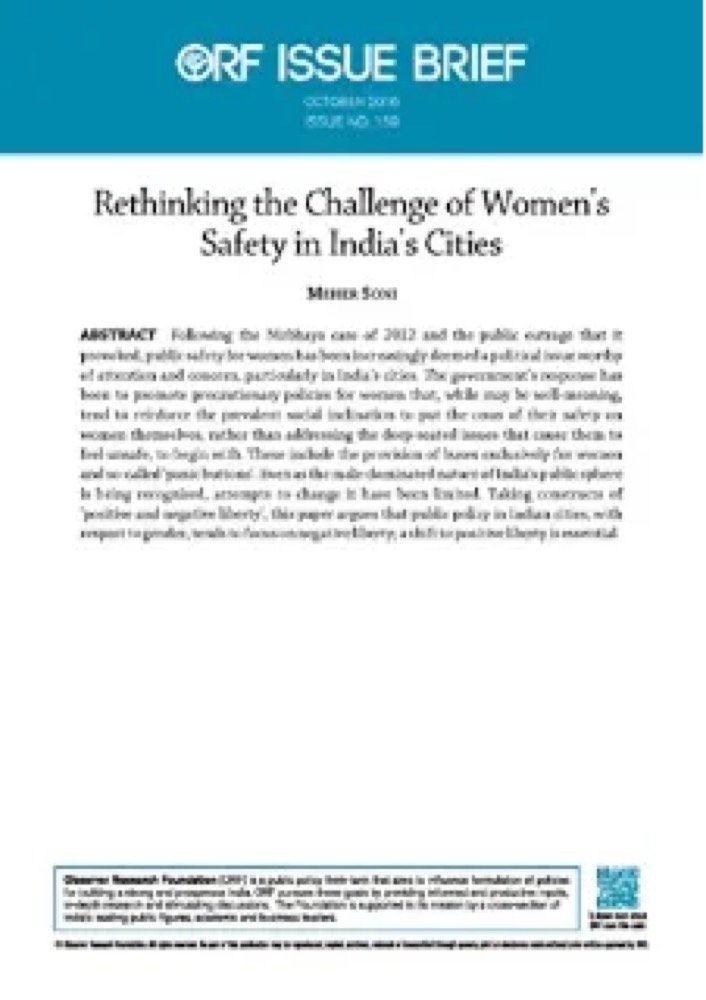
Aadi Foundation’s own summary of a developing story. Read the original report at ORF ↗
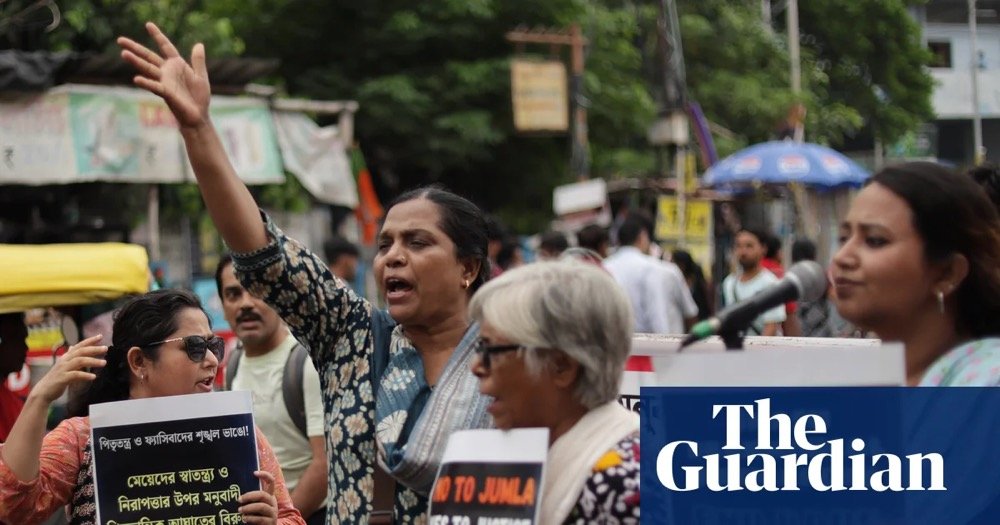
After a series of high-profile assaults drew national attention, Indian cities poured resources into making public spaces safer for women. Yet the results have been limited, with surveys showing that very few women describe the streets around them as genuinely safe. A closer look suggests the problem lies not just in a shortage of gadgets or cameras, but in how safety itself is understood.
Two ideas of freedom
A useful way to frame the issue is the distinction between freedom from and freedom to. The first, sometimes called negative liberty, is about removing threats and obstacles. The second, positive liberty, is about a person's genuine capacity to act, move and shape their own life. Much of India's urban safety policy has concentrated on the first, deploying surveillance and safety devices, while paying far less attention to the second, women's agency and their right simply to exist in public.
This matters because a woman may be technically protected yet still unfree if she can only enter public space for a sanctioned reason, such as work or errands, and never just to linger or belong. The argument is that women often lack a license to just be in the city, always needing to justify their presence in ways men rarely do.
The limits of technology
Panic buttons, GPS tracking and CCTV networks have become the default tools of urban safety, but they carry real flaws. They exclude women without smartphones, and they concentrate on violence in public while overlooking abuse in the home, even though a large majority of assaults are committed by people the victim already knows. They also tend to place the burden of staying safe on women themselves, rather than challenging the male dominance of public space.
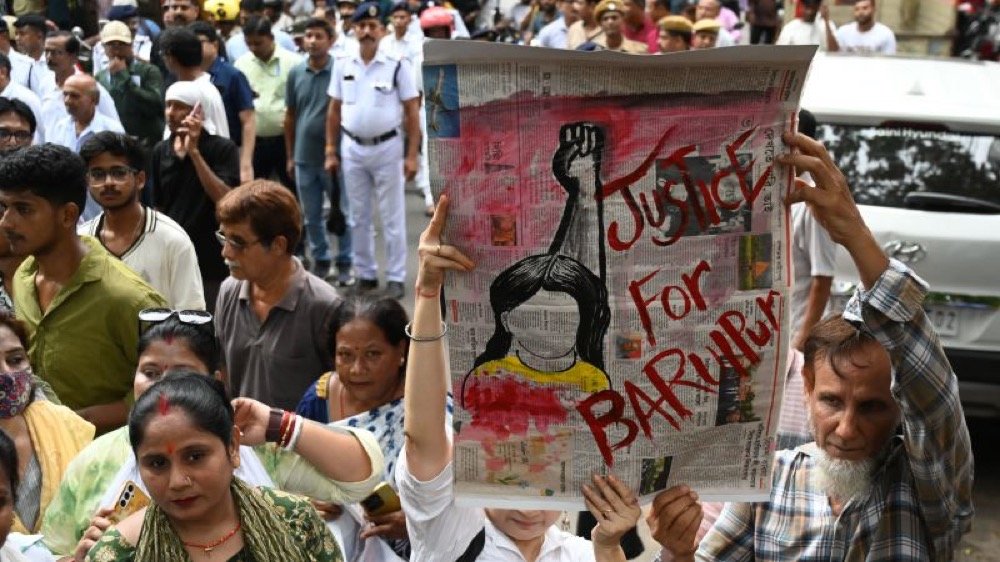
Grassroots movements, by contrast, attack the problem from a different angle. Campaigns that push back against restrictive hostel rules or that reclaim public spaces through collective, visible presence emphasise empowerment and self-determination over surveillance, addressing attitudes rather than merely monitoring behaviour.
Why it matters
Making cities safe for women is not only a matter of installing more cameras or handing out more alarms. It requires rethinking who public space belongs to and confronting the patriarchy that treats women's presence as conditional. That means redesigning streets to encourage diverse use, taking violence within the home as seriously as violence outside it, and directing dedicated safety funds toward empowerment rather than surveillance alone. A truly safe city is one where a woman can move freely not because she is being watched, but because her right to be there is simply taken for granted.
Original reporting
ORF — read the full report
Aadi Foundation Newsroom
Curated and summarised by Aadi Foundation, a youth-led NGO raising awareness on the issues shaping India and the world. Learn about our work →
Turn awareness into action
Support our work, or start something of your own.